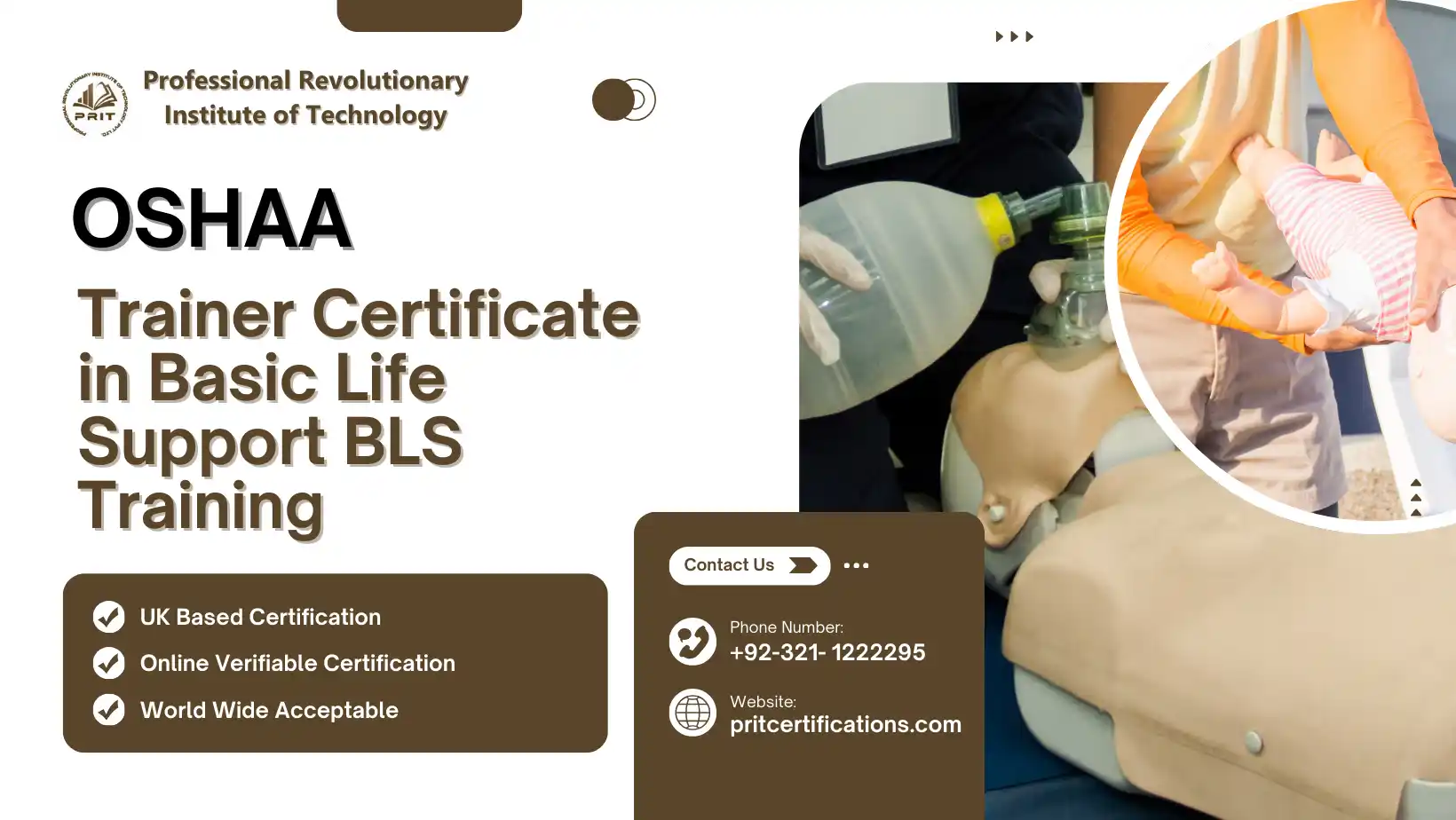
The OSHAA Train the Trainer Certificate in Basic Life Support (BLS) Training is a globally recognized program designed for individuals who aspire to deliver high-quality BLS training in compliance with international standards. This course equips participants with the essential knowledge and advanced instructional skills needed to effectively teach life-saving techniques such as cardiopulmonary resuscitation (CPR), choking management, and the use of automated external defibrillators (AED).
The program blends practical emergency care skills with modern training methodologies, enabling participants to confidently design and deliver engaging BLS sessions. Learners will gain both clinical proficiency and trainer expertise, ensuring they are prepared to assess learners, provide constructive feedback, and uphold ethical and legal responsibilities in training environments.
This qualification is highly suitable for healthcare professionals, first aid trainers, workplace safety officers, and educators seeking to advance their careers while contributing to safer communities. Completing this certification not only enhances professional credibility but also makes a meaningful impact by preparing others to respond effectively in life-threatening emergencies.
Course Overview
Qualification Title: OSHAA Train the Trainer Certificate in Basic Life Support (BLS) Training
Regulated by: OSHAA
Guided Learning Hours (GLH): 40 Hours
Credits: Equivalent Professional Certification
Level: Level 4 (Intermediate Level)
Mandatory Units
- Introduction to Basic Life Support (BLS)
- Understanding the BLS Chain of Survival
- CPR Techniques for Adults, Children, and Infants
- Use of Automated External Defibrillators (AED)
- Choking Management and Airway Obstruction Techniques
- Basic First Aid for Life-Threatening Emergencies
- Teaching Methodologies and Delivery of BLS Training
- Legal, Ethical, and Professional Responsibilities of BLS Trainers
Learning Outcomes
Upon successful completion of this course, learners will be able to:
- Introduction to Basic Life Support (BLS)
- Understand the fundamental principles and importance of BLS in emergency response.
- Understanding the BLS Chain of Survival
- Explain and apply the internationally recognized chain of survival to maximize patient outcomes.
- CPR Techniques for Adults, Children, and Infants
- Perform and teach correct CPR techniques tailored to different age groups.
- Use of Automated External Defibrillators (AED)
- Demonstrate safe and effective AED use in emergencies.
- Choking Management and Airway Obstruction Techniques
- Apply appropriate techniques to relieve airway obstructions across various age groups.
- Basic First Aid for Life-Threatening Emergencies
- Deliver immediate care for emergencies such as cardiac arrest, shock, and severe bleeding.
- Teaching Methodologies and Delivery of BLS Training
- Design, deliver, and assess engaging BLS training sessions using adult learning principles.
- Legal, Ethical, and Professional Responsibilities of BLS Trainers
- Adhere to international legal, ethical, and professional standards in training delivery.
Entry Requirements
- Minimum age: 18 years.
- Basic knowledge of first aid or healthcare preferred.
- Good communication and presentation skills.
- No formal academic qualifications required.
Course Benefit
- Gain an internationally recognized BLS Train the Trainer certification.
- Acquire advanced CPR, AED, and first aid training delivery skills.
- Enhance employability in healthcare, training, and workplace safety sectors.
- Contribute to building safer communities by training others in life-saving techniques.
- Strengthen professional credibility with recognized teaching competence.
Why Choose This Course?
This program combines clinical expertise with advanced training skills, ensuring participants can not only save lives but also effectively train others. It aligns with international standards, making it ideal for professionals aiming to enhance their career prospects and impact.
Who Can Enroll in This Course?
- Healthcare professionals and emergency responders.
- First aid instructors and safety trainers.
- Workplace safety officers and HR professionals.
- Educators and community leaders interested in life-saving training.
Future Progression
Graduates of this course may progress to:
- Advanced First Aid or Pre-Hospital Care Trainer Certifications.
- OSHAA Advanced Train the Trainer programs.
- Specialized healthcare and emergency response training roles.
- Leadership positions in training, safety, and emergency preparedness.